
Plaster is a beautiful, historic material found in many Massachusetts homes. However, due to seasonal temperature shifts and structural settling, plaster walls can develop cracks over time.
Here is how professionals restore these surfaces back to a seamless, flawless look.
Step 1: Prep the Crack
Do not simply put joint compound over a crack; it will reappear within months. You must first widen the crack slightly using a utility knife or scraper tool to create a "V" shape. This gives the new plaster a larger surface area to bond to. Clean out any loose dust or plaster crumbs.
Step 2: Apply Fiberglass Mesh Tape
Place adhesive fiberglass mesh tape directly over the prepped crack. The tape acts like rebar in concrete, distributing structural tension and preventing the crack from expanding or opening back up.
Step 3: Mix and Apply the Joint Compound or Plaster
For deep repairs, use a setting-type compound (often called "hot mud" due to the chemical heat reaction as it sets). Apply the first coat firmly through the mesh tape using a plastering knife. Let it set completely.
Step 4: Apply the Skim Coat
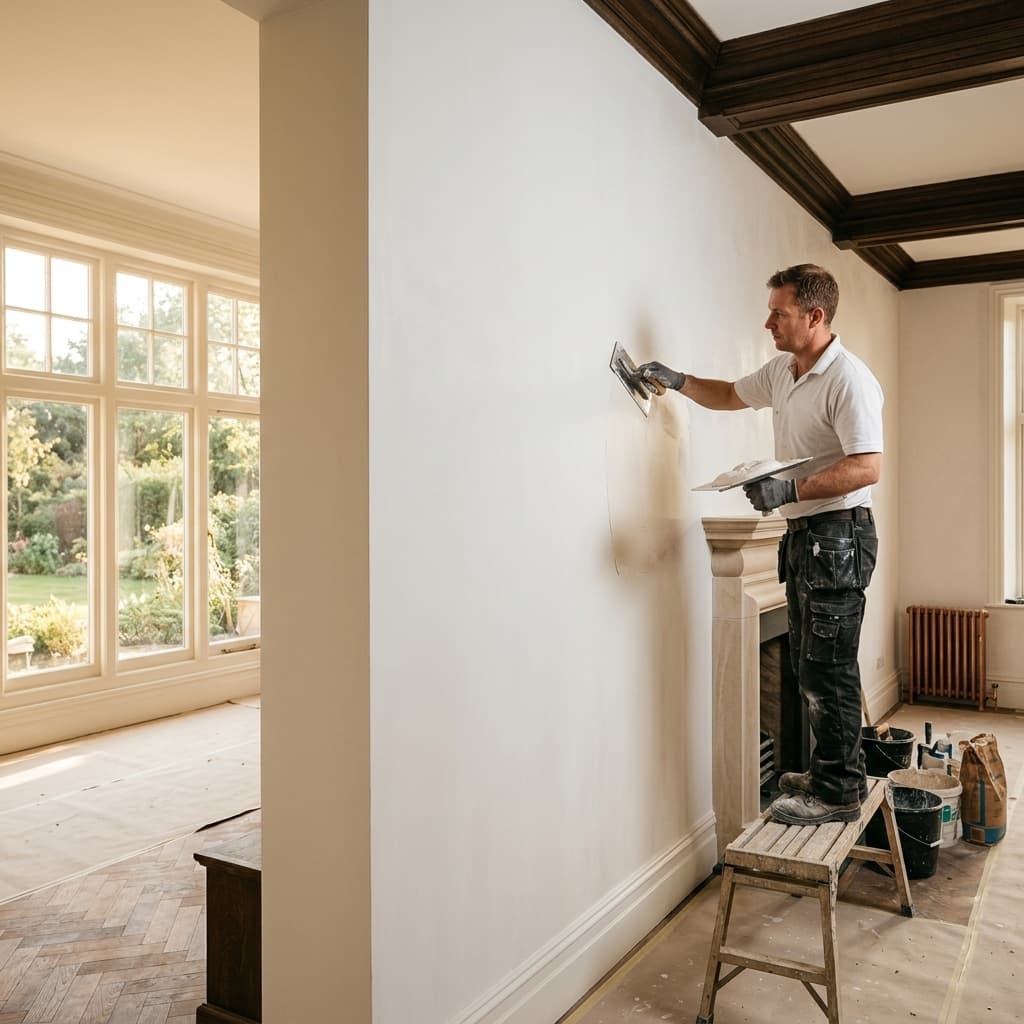
Once the base coat is set, apply a thin skim coat of finishing plaster or joint compound over the area, feathering the edges outward to blend into the surrounding wall.
For historic homes, getting a perfect texture match requires a master plasterer's eye. If your walls require professional restoration, reach out to the specialists at Nana Plastering for an undetectable, seamless repair.

Commentaires